qEEG Mapping
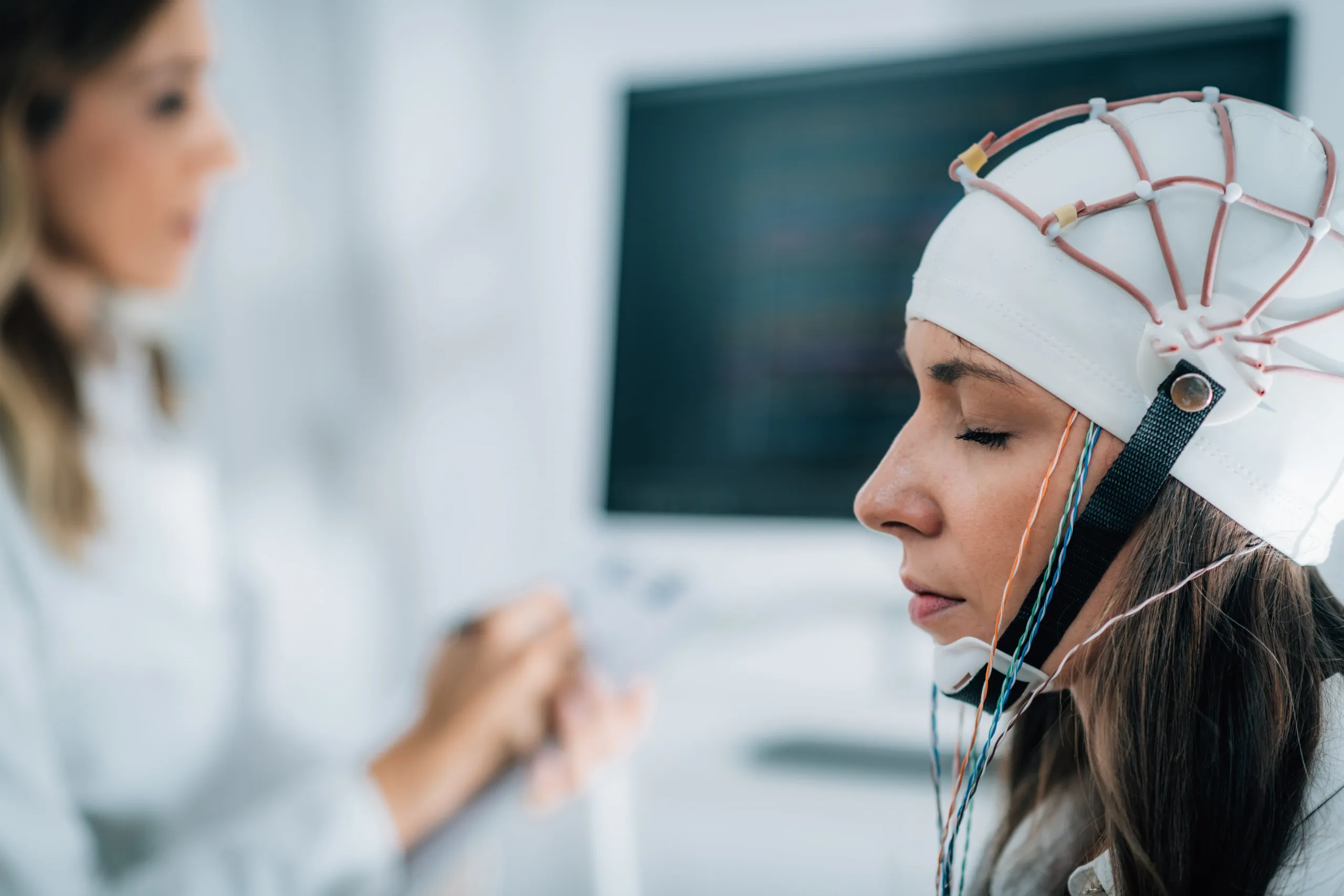
Our provider conducts comprehensive brain mapping to identify dysregulated patterns and design your personalized protocol.
Train Your Brain Naturally
Understanding Dysregulation
Many people with ADHD, anxiety, depression, or sleep disorders experience brain wave patterns that are stuck in unhelpful states—racing thoughts, difficulty focusing, persistent worry, or inability to relax. Traditional medications can help manage symptoms but don't teach the brain new patterns. You may find yourself dependent on medication, dealing with side effects, or feeling like you're just masking the problem rather than addressing the root cause. For trauma survivors and those with TBI, the brain's natural regulation systems may be disrupted, making it difficult to find calm or clarity even in safe environments.
Neurofeedback therapy works by giving your brain real-time feedback about its electrical activity, allowing it to learn healthier patterns naturally. Using advanced qEEG brain mapping, we identify specific areas of dysregulation and create personalized training protocols. As you watch a screen during sessions, your brain receives instant feedback when it produces more balanced wave patterns—gradually learning to self-regulate without medication. This natural approach addresses the underlying neurological patterns, helping you develop lasting improvements in focus, emotional regulation, sleep quality, and cognitive function for ADHD, anxiety, depression, PTSD, TBI, and sleep disorders.

EEG-Based Brain Training Technology
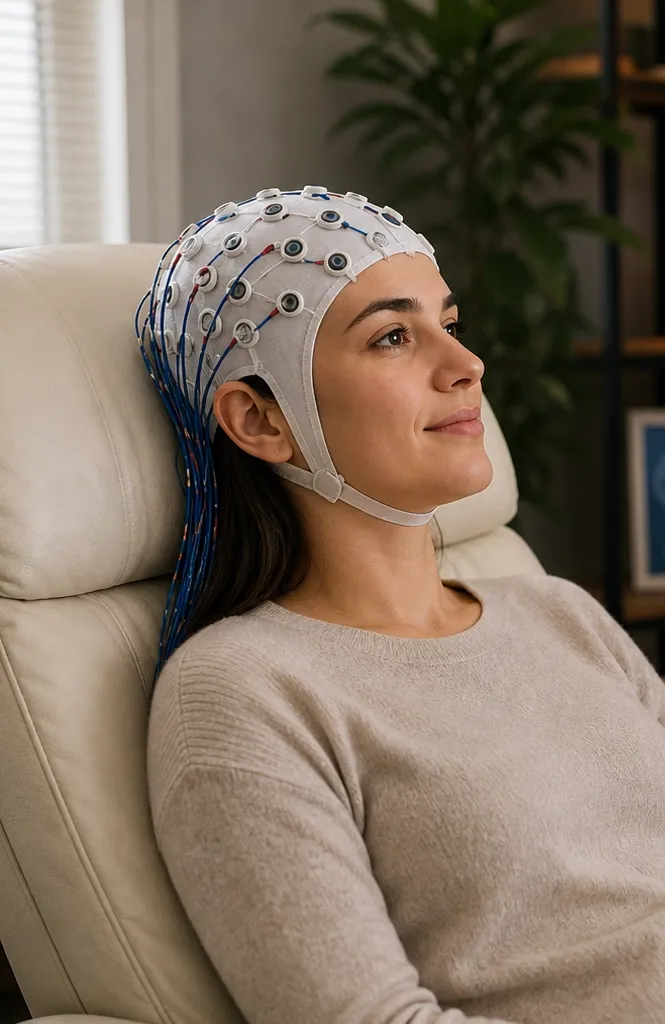
Neurofeedback therapy, also called EEG biofeedback or neurotherapy, is a non-invasive treatment that uses real-time monitoring of brain wave activity to teach the brain to function more efficiently. During a session, sensors placed on your scalp measure electrical activity in different regions of your brain. This data is displayed on a screen in the form of a video game, movie, or visual feedback that responds instantly to your brain's activity. When your brain produces healthier wave patterns—such as increased focus-related beta waves or calming alpha waves—you receive positive feedback through the screen. Over time, your brain learns to reproduce these beneficial states on its own, similar to how you might learn any skill through practice and immediate feedback.
The science behind neurofeedback is rooted in neuroplasticity, the brain's ability to form new neural connections and reorganize itself. Research has shown that specific brain wave patterns are associated with different mental states and disorders. For example, people with ADHD often show excessive slow-wave activity (theta) and reduced fast-wave activity (beta) in areas related to attention and executive function. Those with anxiety may exhibit overactive high-frequency beta waves. By providing targeted training based on qEEG brain mapping—a comprehensive analysis of your brain's electrical patterns—neurofeedback helps normalize these dysregulated patterns without medication or invasive procedures.

Natural, Lasting Results

No medication-related side effects or dependency concerns
qEEG-guided training tailored to your unique brain patterns
Supports lasting self-regulation with consistent training
Comfortable sessions with no recovery time
Backed by decades of clinical use and study
Applicable across multiple neurological and mental health concerns
Compare Your Options
| Treatment | Mechanism | Session Time | Results Timeline | Duration | Invasiveness | Best For |
|---|---|---|---|---|---|---|
| Neurofeedback Therapy | EEG-guided brain training | 30 minutes | Gradual, individualized | Series-based | Non-invasive | ADHD, anxiety, sleep, cognitive support |
| Exomind TMS Therapy | Magnetic brain stimulation | 20-30 minutes | Several weeks | 20-36 sessions | Non-invasive | Depression, OCD, treatment-resistant conditions |
| Brain Mapping (qEEG) | Diagnostic assessment | 60 minutes | Immediate data | Single session | Non-invasive | Treatment planning, baseline measurement |
| Medication | Neurochemical modulation | Daily | Varies by individual | Ongoing | Internal | Symptom management |

Candidacy & Considerations
Neurofeedback therapy is most effective for individuals seeking a non-pharmacological approach to brain-based conditions or those looking to enhance their current treatment. It works well for both children and adults who can sit comfortably for approximately 30-minute sessions and engage with visual feedback on a screen.
During your initial qEEG brain mapping session, our provider will assess your specific brain wave patterns and discuss whether neurofeedback is an appropriate standalone treatment or best combined with other therapies.
Our provider conducts comprehensive brain mapping to identify dysregulated patterns and design your personalized protocol.
Non-invasive sensors are positioned on your scalp to monitor brain wave activity in targeted regions.
You watch a screen displaying a video, game, or animation that responds to your brain's electrical patterns in real time.
Your brain receives positive feedback when it produces healthier wave patterns, gradually learning to self-regulate.
Our provider tracks your improvements and adjusts protocols as your brain develops new regulation skills.

What to Know
Neurofeedback is considered low-risk and non-invasive. Sensors only read brain activity and do not deliver electrical stimulation.
Most patients do not experience side effects. Some may notice temporary mild effects during early sessions as the brain adapts, such as fatigue, slight headache, or increased awareness of emotions. These effects are typically short-lived and resolve as training continues.
In rare cases, individuals with seizure disorders may require modified protocols. Our staff's specialized training in qEEG analysis and the clinical experience ensure protocols are tailored to your specific brain patterns and medical history.
Neurofeedback is not a replacement for emergency psychiatric care. Patients on psychotropic medications can safely receive neurofeedback, though medication adjustments may be needed as brain function improves—always coordinate with your prescribing provider.
Neurofeedback therapy at West Eastern Health is priced per session. Most patients benefit from 20-40 sessions for lasting results, with sessions typically scheduled 2-3 times per week initially.
Pricing for qEEG brain mapping, individual neurofeedback sessions, and package options is provided during your initial consultation.
Contact West Eastern Health at (904) 593-8480 to discuss pricing and schedule your first session.

Near Jacksonville & St. Johns
Specialized training in qEEG brain mapping and neuroscience
Clinical trial experience in PTSD/TBI neurotherapy protocols
Every plan based on comprehensive qEEG brain mapping analysis
Combines neurofeedback with mental health therapy and wellness care
Discover complementary therapies designed to work alongside your treatment plan for optimal results.

Therapy, counseling, and holistic approaches for lasting emotional wellness

Non-opioid pain management through injections, PEMF, and neuromodulation
Your Questions Answered
Neurofeedback is a non-invasive brain training technique that uses real-time EEG monitoring to teach your brain healthier electrical patterns. Sensors on your scalp measure brain waves while you watch a screen that provides instant feedback, helping your brain learn to self-regulate naturally without medication.
During sessions, your brain activity is displayed through visual feedback like a video game or movie. When your brain produces beneficial wave patterns—such as focused beta waves or calm alpha waves—the screen rewards you with positive feedback. Through repetition, your brain learns to reproduce these healthier states on its own, leveraging neuroplasticity to create lasting change.
Most patients require 20-40 sessions for optimal, lasting results, though some notice improvements within 6-10 sessions. Sessions are typically scheduled 2-3 times per week initially. The exact number depends on your condition, severity, consistency of attendance, and individual brain response. A qEEG brain map helps determine your personalized protocol.
Neurofeedback has strong research support for ADHD, anxiety disorders, depression, PTSD, traumatic brain injury, sleep disorders, and cognitive performance enhancement. It's also used for migraines, addiction recovery, autism spectrum support, and peak performance training. We'll assess your specific condition during the initial consultation.
Neurofeedback is typically not covered by insurance. Contact our office at (904) 593-8480 to discuss pricing.
Neurofeedback teaches your brain new self-regulation patterns through neuroplasticity, and research shows these changes can be long-lasting—often persisting years after treatment. However, some individuals benefit from occasional "booster" sessions, especially during high-stress periods or life changes. The brain retains learned patterns similar to other skills.
Neurofeedback is extremely safe with minimal risks. Most patients experience no side effects. Rarely, temporary mild fatigue, slight headache, or mood fluctuations may occur in the first few sessions as the brain adjusts. These typically resolve quickly. Individuals with seizure disorders require specialized protocols and medical oversight.
Yes, neurofeedback can be safely combined with psychiatric medications. As your brain function improves, medication adjustments may be needed—always coordinate with your prescribing provider. Some patients eventually reduce or discontinue medications under medical supervision, while others continue medication with improved effectiveness.