Positioning
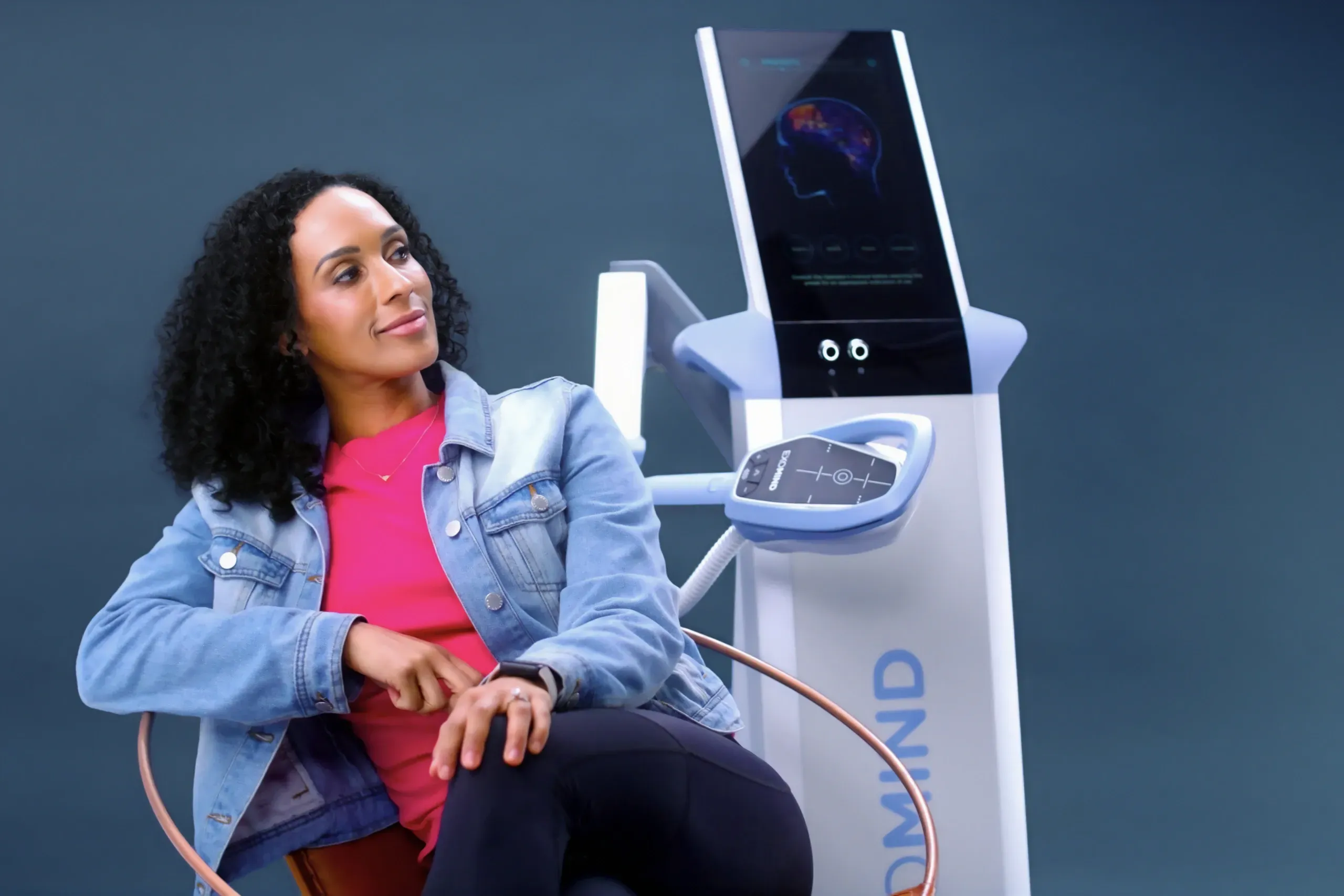
Our staff positions you comfortably in the treatment chair and places the Exomind magnetic coil precisely over the target brain region.
Non-Invasive Depression & OCD Treatment
Finding a better path to mental wellness
Nearly one-third of patients with major depressive disorder don't respond adequately to antidepressants, leaving them cycling through medications with limited improvement and compounding side effects. OCD and anxiety disorders present similar challenges, with many patients struggling to find relief while managing weight gain, sexual dysfunction, emotional blunting, and the fear of long-term medication dependence. Traditional talk therapy alone may not address underlying brain activity patterns that perpetuate symptoms, leaving patients feeling stuck despite their best efforts.
Exomind TMS therapy offers a completely different approach by directly targeting the neural circuits responsible for mood regulation, obsessive thoughts, and anxiety responses. This FDA-cleared technology uses focused magnetic pulses to stimulate underactive brain regions, restoring healthy neural communication without medications, sedation, or systemic side effects. Patients remain fully awake and alert during the 20-minute sessions, returning immediately to their daily activities. With response rates reported in clinical studies for depression and documented improvements for OCD, Exomind TMS provides an alternative option for patients who have not achieved adequate results with traditional treatments.

Magnetic Brain Stimulation Technology
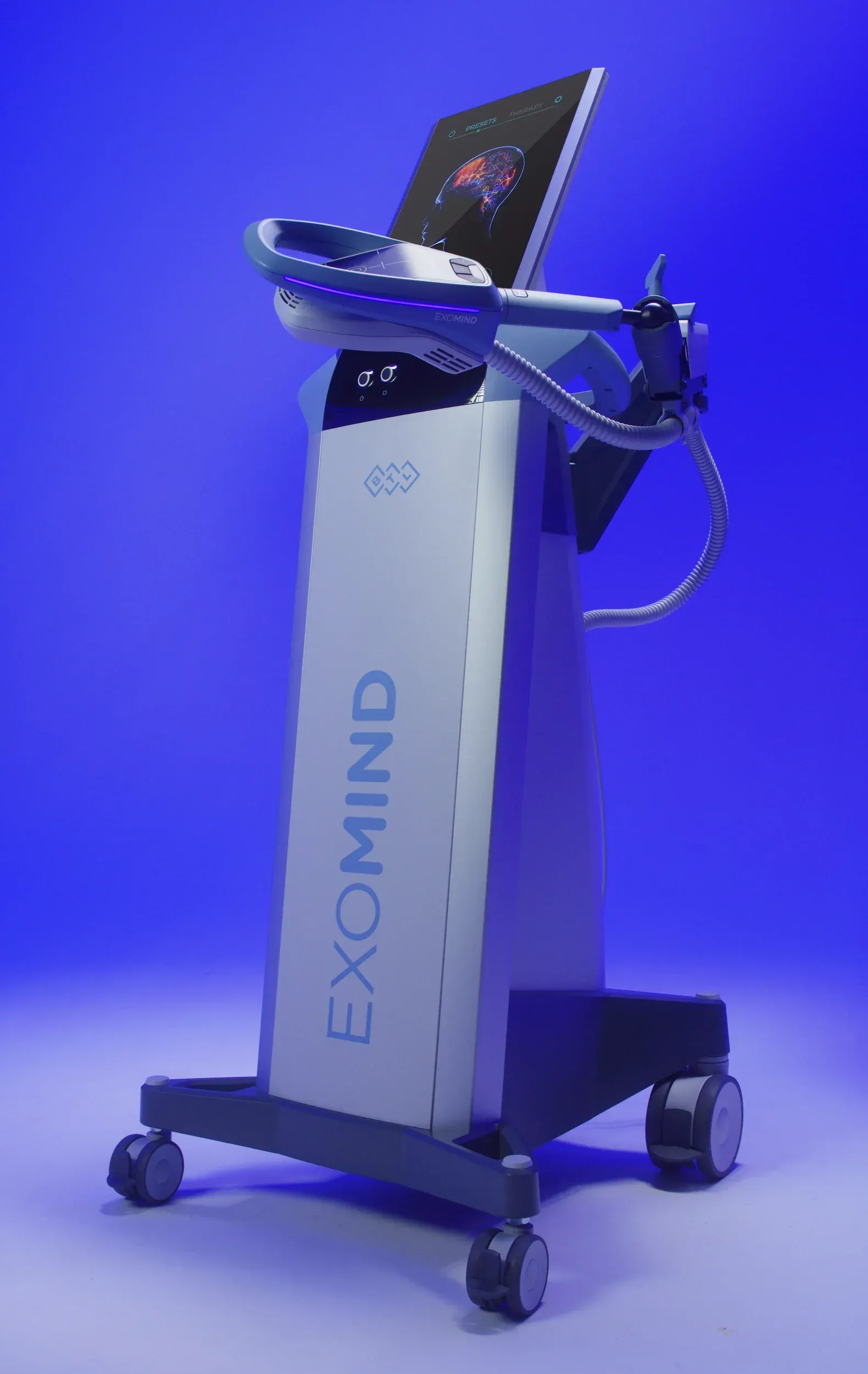
Exomind is an advanced Transcranial Magnetic Stimulation (TMS) device manufactured by BTL Aesthetics, designed to deliver precise, targeted magnetic pulses to specific regions of the brain involved in mood regulation. TMS therapy works on the principle of electromagnetic induction—the same physics that powers electric motors and generators. When a magnetic coil positioned against the scalp generates rapidly changing magnetic fields, these fields pass painlessly through the skull and induce small electrical currents in targeted brain tissue, specifically the dorsolateral prefrontal cortex (DLPFC).
In patients with depression, this region shows reduced activity compared to healthy individuals. The magnetic pulses from Exomind stimulate neurons in the DLPFC, gradually increasing their baseline activity and restoring normal communication with other mood-regulating brain structures like the limbic system. This process, called long-term potentiation, strengthens synaptic connections and promotes lasting neuroplastic changes. The FDA first cleared TMS for treatment-resistant major depressive disorder in 2008, then expanded approval to include OCD in 2018 based on robust clinical evidence demonstrating both safety and efficacy.

Why patients choose TMS

No surgery, anesthesia, or sedation required
Avoid pharmaceutical side effects and interactions
Proven safe and effective through rigorous clinical trials
Resume work and activities immediately after sessions
Minimal side effects compared to medications or ECT
Sustained improvement for months after treatment completion
Treatment comparison
| Treatment | Mechanism | Time | Results | Duration | Downtime | Best For |
|---|---|---|---|---|---|---|
| Exomind TMS | Magnetic brain stimulation | 20 min/session over several weeks | Response varies; often gradual | Varies by individual | None | Treatment-resistant depression, OCD |
| Neurofeedback Therapy | Brain wave training | 30-45 min, 20+ sessions | 4-8 weeks | Long-term with practice | None | ADHD, anxiety, peak performance |
| Ketamine Therapy | NMDA receptor modulation | 2 hours/session, 6 sessions | Within hours to days | Weeks to months | 2 hours | Severe depression, suicidal ideation |

Finding the right patients for TMS therapy
Exomind TMS therapy is most effective for adults diagnosed with major depressive disorder or obsessive-compulsive disorder who haven't achieved adequate relief from medications and psychotherapy. The ideal candidate has tried at least one antidepressant without success and seeks a non-pharmacological approach to treatment.
Our team will conduct a comprehensive medical and psychiatric evaluation to determine if TMS is appropriate for your specific situation, including review of your medication history, brain imaging if needed, and discussion of realistic treatment expectations.
Our staff positions you comfortably in the treatment chair and places the Exomind magnetic coil precisely over the target brain region.
Our team determines your motor threshold by delivering test pulses and adjusting intensity to your individual brain physiology.
The Exomind device delivers 20 minutes of patterned magnetic pulses while you remain awake, alert, and able to listen to music or podcasts.
After the session ends, you'll receive any necessary adjustments to your protocol and schedule your next appointment before leaving.
What to know before starting
Exomind TMS therapy is generally well tolerated, with most side effects being mild and temporary. The most common experience is scalp discomfort or mild headache during or shortly after treatment, which often improves as sessions continue.Some individuals may notice facial muscle twitching during treatment or brief lightheadedness, both of which typically resolve quickly. Serious adverse events are rare. A small risk of seizure exists, though this is uncommon with proper screening and protocol adherence.
TMS does not involve sedation and is not associated with systemic medication side effects. Patients with certain implanted metallic devices or specific medical conditions may not be eligible. A thorough evaluation is performed prior to treatment to ensure safety and appropriateness.
Exomind TMS therapy at West Eastern Health is self-pay only and is not covered by insurance. Individual sessions start at $500, though we offer discounted packages for standard courses of 6 sessions over 3-6 weeks. Contact our office at (904) 593-8480 for current pricing and package details.
During your initial consultation, we'll provide a detailed cost estimate based on your recommended treatment plan. Call (904) 593-8480 to discuss your specific situation.

Ponte Vedra Beach & Jacksonville Area
Experience with qEEG-guided customized TMS protocols from military studies
Psychiatric and family nurse practitioner expertise for comprehensive care
TMS combined with therapy, nutrition, and lifestyle support for optimal outcomes
Treatment parameters tailored to your unique brain activity and symptoms
Discover complementary therapies designed to work alongside your treatment plan for optimal results.

Therapy, counseling, and holistic approaches for lasting emotional wellness

Non-opioid pain management through injections, PEMF, and neuromodulation
Answers to your questions
TMS (Transcranial Magnetic Stimulation) therapy uses focused magnetic pulses to stimulate underactive brain regions involved in mood regulation, particularly the dorsolateral prefrontal cortex. It's FDA-cleared for treatment-resistant depression and OCD.
Exomind is an advanced TMS device manufactured by BTL Aesthetics that delivers precise, targeted magnetic stimulation to specific brain regions. It's designed for comfort and efficacy in treating depression, OCD, and other neuropsychiatric conditions.
A standard TMS protocol consists of 20-36 sessions delivered five times per week over 4-6 weeks. Some patients require maintenance sessions after the initial treatment course to sustain benefits.
Most patients describe TMS as painless, though some experience mild scalp discomfort or tapping sensations during treatment. Any discomfort typically decreases after the first few sessions as you acclimate to the sensation.
Exomind TMS therapy at West Eastern Health is self-pay only and is not billed to insurance. Contact our office at (904) 593-8480 to discuss current pricing and what's included in your treatment course.
TMS is FDA-cleared for treatment-resistant major depressive disorder (since 2008) and OCD (since 2018). Emerging research supports its use for anxiety disorders, PTSD, chronic migraines, and other neuropsychiatric conditions.
Many patients experience sustained improvement for 6-12 months or longer after completing treatment. If symptoms gradually return, maintenance TMS sessions can help preserve benefits without returning to daily sessions.
Yes, TMS requires no sedation or anesthesia, so you can drive yourself to and from appointments and resume all normal activities immediately after each session.